A distinctive story for your portfolio
Açaí seed biomass gives the brand a tangible connection to Brazil’s Amazon and a story that starts at the material’s origin.
FOR DISTRIBUTORS & PET RETAILERS
Funnbite brings açaí seed biomass from the Brazilian Amazon and Polimex bio-resin to pet care. Discover the brand, the material and a fresh opportunity for your portfolio.
MADE FOR*Bio-resin composts under suitable conditions. Plastic free means free from conventional plastics. About the material and disposal.
OUR BRAND & PURPOSE
Funnbite connects plant-based material innovation with everyday play. With Polimex technology and açaí biomass from the Brazilian Amazon, the brand brings a distinctive origin and material story to pet care — for the partners who introduce it and the people who choose it.
BRAZILIAN AMAZON ORIGIN
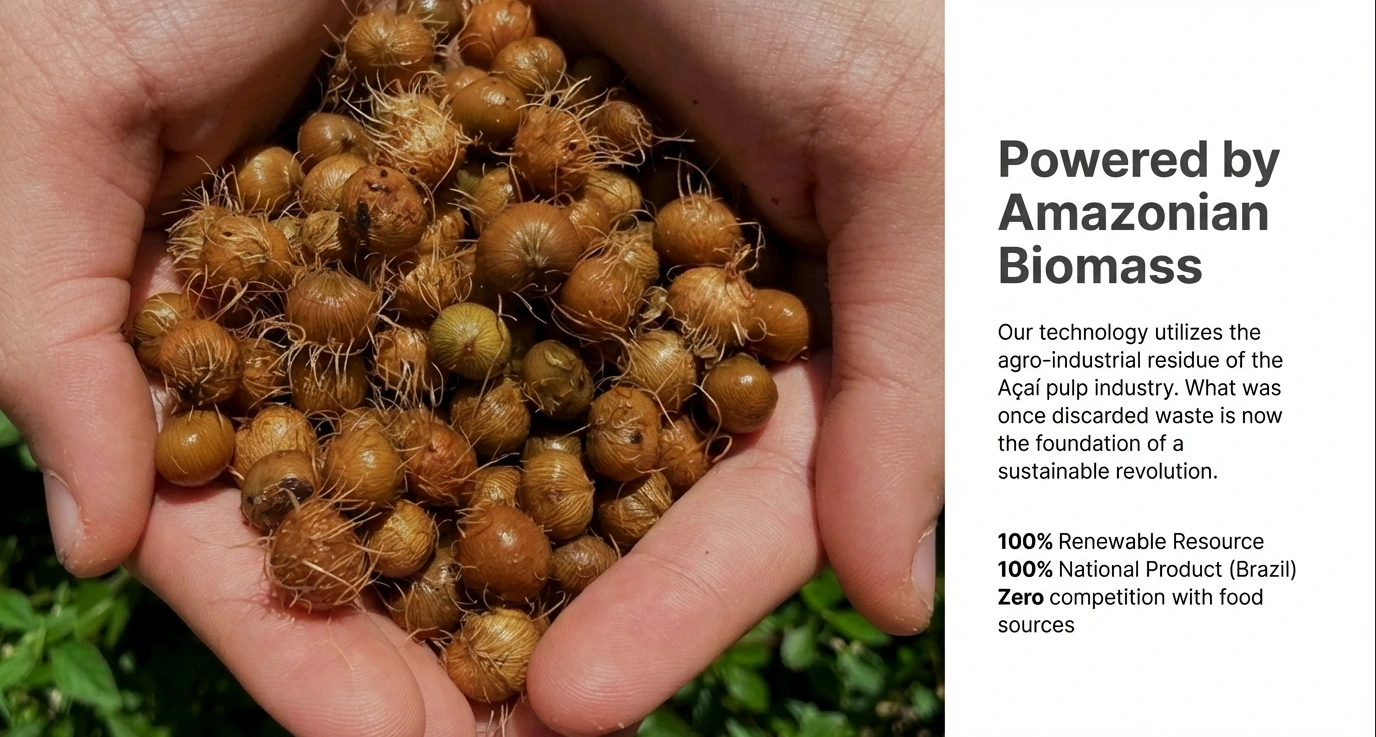
The story begins with açaí from the Brazilian Amazon. Once the pulp is used, the seed still has more to give. Polimex turns this biomass into a component of its PNB bio-resin — Natural Biodegradable Plastic.
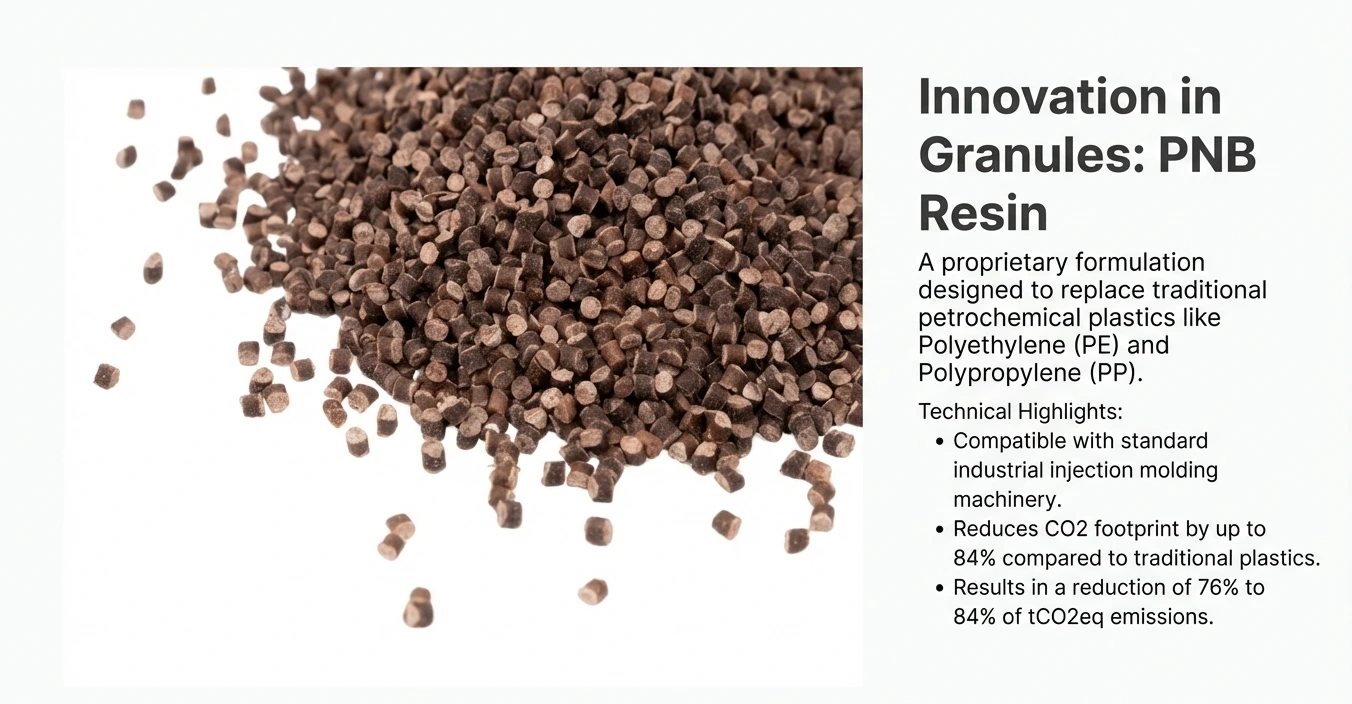
For Funnbite, an eco-conscious material choice starts with renewable plant inputs and a new use for açaí processing by-products. The biomass becomes part of the PNB bio-resin formulation. In granule form, the material is ready for its next transformation: a Funnbite chew, with compostability considered at the end of its useful life.
FOR DISTRIBUTORS & PET RETAILERS
Funnbite brings together Brazilian Amazonian origin, Polimex material innovation and a defined place in the chew category.
Açaí seed biomass gives the brand a tangible connection to Brazil’s Amazon and a story that starts at the material’s origin.
From seed to bio-resin, play and appropriate composting: a clear narrative for product discovery and conversations in store.
Designed for soft and medium chewers, with suitability, supervision and disposal guidance to support informed recommendations.
OUR COMMERCIAL PERSPECTIVE
These findings suggest that a clear story about materials and origin may resonate with younger shoppers. For Funnbite, the opportunity is to make that story concrete, with product suitability, value and transparent information at its center.
THE FUNNBITE CYCLE
From açaí to bio-resin, from playtime to a new beginning. Follow six connected stages, with appropriate composting helping close the material cycle.
Select a stage to explore. Illustrative journey; composting requires a suitable system that accepts the material.
The seed, a by-product of açaí processing, can take on a new role. Putting this biomass to use is the starting point for the Polimex technology.
For Funnbite, the term describes replacing conventional plastics with a compostable, plant-based bio-resin. Polimex classifies PNB as a bioplastic; it is still a polymer material.
Polimex states that PNB is 100% compostable. Decomposition depends on the composting conditions and the product. Follow the packaging instructions and check acceptance with your local system. Do not litter.
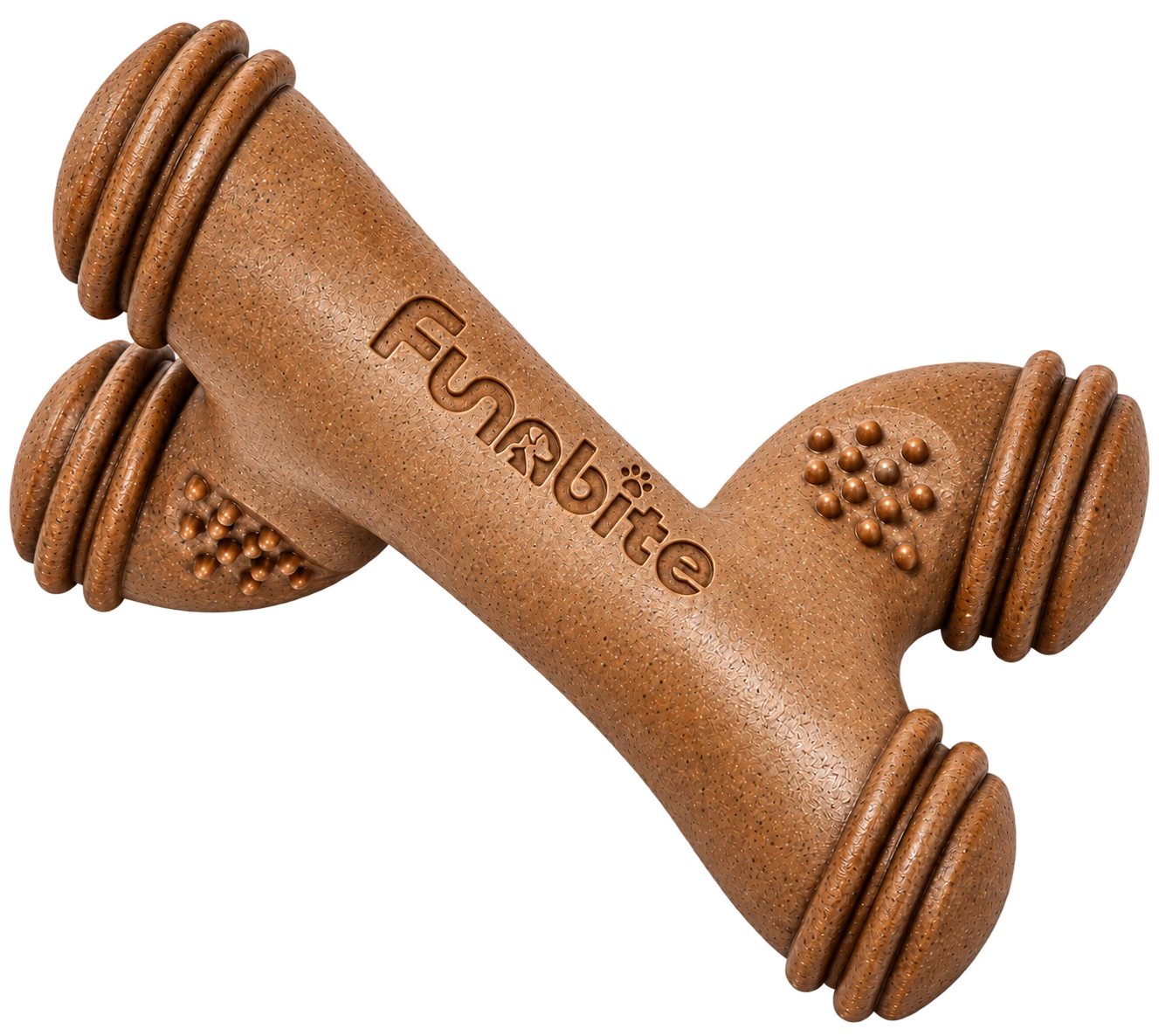 Texture, nature and a new purpose.
PRODUCT & POSITIONING
Available in Small, Medium and Large. All sizes share the same firmness.
Choose the right size for your dog and always supervise use.
This is a toy, not food. Use only for soft and medium chewers. Remove it if your dog destroys the toy or swallows pieces. No chew toy is indestructible.
Explore dental-care guidance ↗A MORE MINDFUL WAY TO CHEW
Choosing a chew means considering chewing style, size and dental health. Extreme hardness is not always the right choice.
Excessively hard objects can cause dental injuries and fractures, affecting the enamel and, in some cases, deeper structures.
AAHA and the Cornell University College of Veterinary Medicine advise paying attention to hardness. Being able to make a dent with a thumbnail is a practical guide; AAHA also recommends some flexibility.1, 2
VETERINARY GUIDANCE · AAHA
AAHA warns that very hard chews can damage teeth. It suggests checking whether the surface gives under pressure and whether the toy bends slightly.
Read the guidance ↗VETERINARY MEDICINE · CORNELL
Cornell links chewing very hard objects to tooth fractures and stresses the importance of choosing an appropriate chew size.
Understand the risk ↗LABORATORY STUDY · 2019
In a study of 24 fourth premolar teeth from dogs, fractures occurred under forces within the chewing capability of dogs. The study helps explain mechanical risk; it did not test Funnbite.
Explore the study ↗These references address chewing and dental health in general. They did not evaluate Funnbite products and do not represent a brand endorsement or a guarantee against fractures. Consult your veterinarian if you notice pain or dental damage.
MICROPLASTICS & PETS
What science is learning about microplastic exposure in dogs and cats, and why the findings deserve a closer look.
Microplastics are plastic particles smaller than 5 mm. Researchers have reported their presence in pet food, fecal samples and internal tissues from dogs and cats.
This growing field of research raises questions about the materials in our pets’ environments. The studies below explore exposure and possible biological associations.
PET FOOD & FECAL SAMPLES · 2019
Researchers analyzed 58 pet-food samples and 78 fecal samples from cats and dogs in the United States. Measurements of PET and polycarbonate suggested that food was only one source of exposure.
Read the exposure study ↗INTERNAL TISSUES · 2022
A preliminary study examined tissues from 25 dogs and 24 cats. Some suspected particles were confirmed as plastic polymers using micro-Raman spectroscopy. Particle counts were low, and identification remained technically challenging.
Explore the tissue study ↗CANINE REPRODUCTIVE TISSUE · 2024
A study of testicular samples from 47 dogs reported plastic polymers and explored associations with reproductive measures. It did not establish cause and effect. The methods were later debated in a scientific commentary and an authors’ response.
These studies did not test Funnbite, Polimex bio-resin or particle release from chew toys. They do not establish that Funnbite reduces microplastic exposure or improves health. Material information from Polimex is presented separately in our material story.
LET’S TALK
Material, product suitability and responsible use — for trade partners and pet parents.
A NEW PERSPECTIVE FOR YOUR PORTFOLIO
A material with a story. A clear purpose in pet care. Discover the Funnbite proposition for retail and distribution.
sales08@nbpetsound.comSources accessed in October 2026. Funnbite features and intended use follow the brand materials. The Polimex seal is reproduced from the supplied packaging; it is not a clinical certification of the chew.
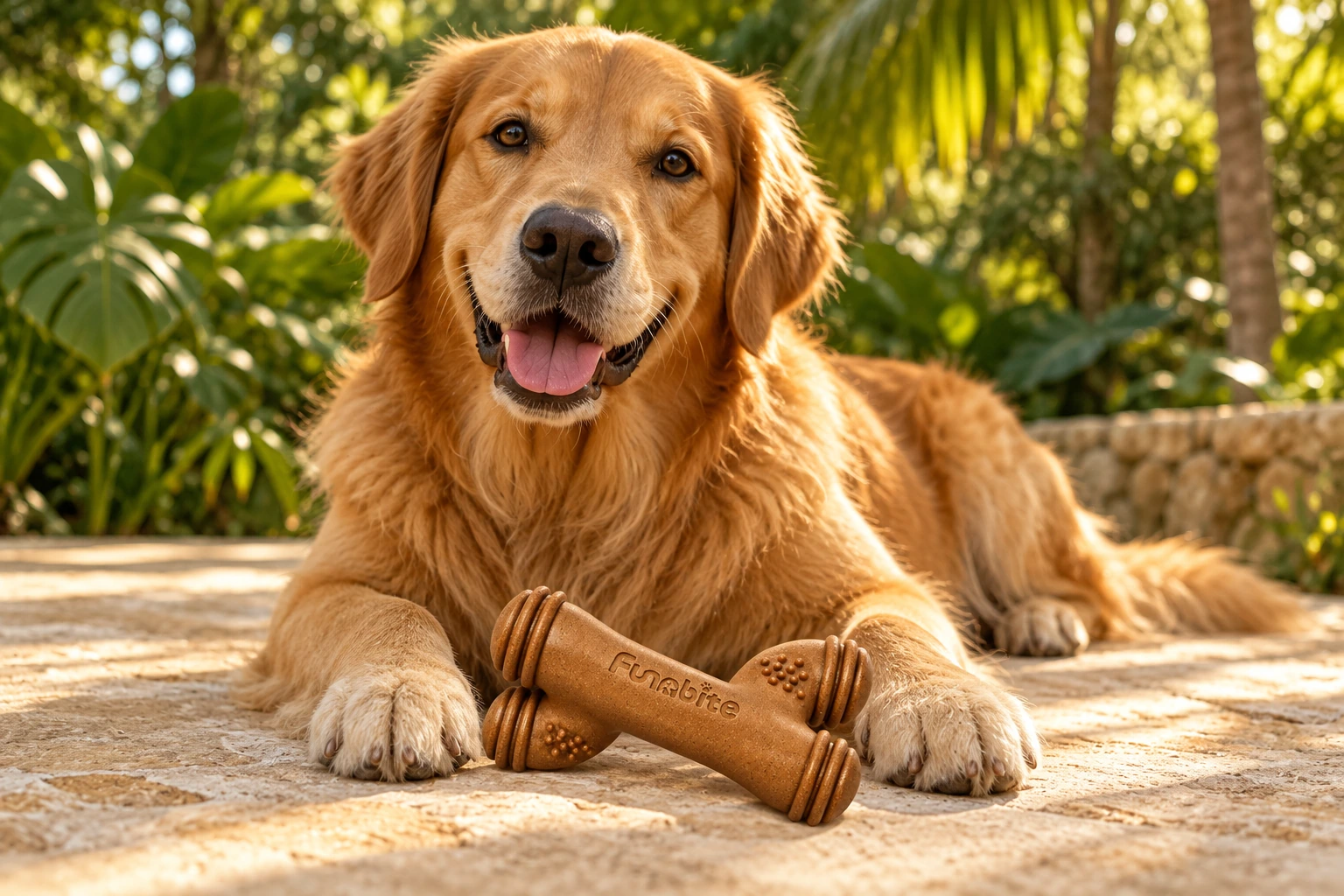
The Amazon landscape, dog lifestyle scene and açaí still life are AI-generated illustrations. The seed-biomass and resin-granule images are cropped views of supplied Polimex reference materials. Logo and packaging are supplied Funnbite brand materials. AI was used to remove the logo and chew backgrounds for display, and to update the brand on the conceptual worn-chew illustration. The worn-chew, compost and young-palm visuals are AI-generated conceptual illustrations; they do not document a product wear test or a measured composting trial. The new-growth stage represents compost supporting plant growth, not a claim that a toy directly becomes a seed or tree.